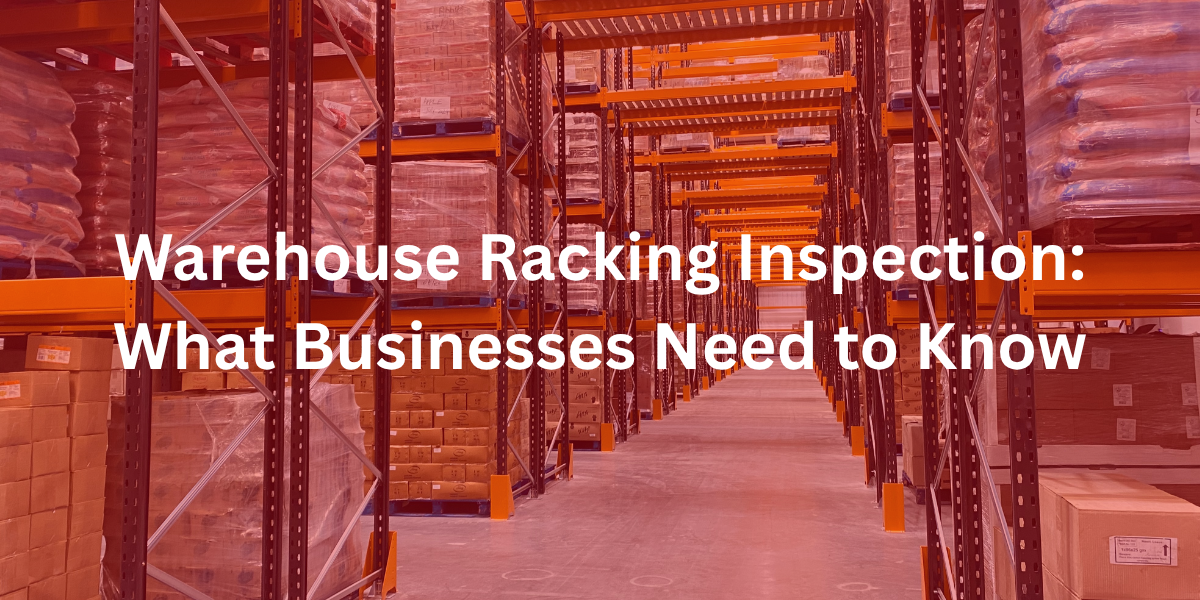
What Businesses Need to Know
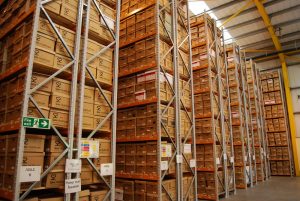
Warehouse racking is designed to handle significant loads day after day, but even robust storage systems can become damaged through everyday operations.
Forklift impacts, overloaded bays, worn components and general wear and tear can all affect the condition of your racking. That’s why regular inspections are an important part of maintaining a safer, well-managed warehouse.
Why do racking inspections matter?
Racking damage isn’t always immediately obvious. A bent upright, damaged beam or displaced component can affect the integrity of a storage system.
Regular inspections help businesses identify issues early, before they become more serious — giving you the opportunity to take appropriate action and keep your storage environment operating safely.
What should a visual inspection identify?
A visual inspection should look for signs of damage or deterioration, including:
- Bent or damaged uprights and beams
- Forklift impact damage
- Missing or damaged components
- Loose or displaced fixings
- Damage to safety barriers and protective equipment
- Incorrectly loaded or overloaded bays
- Changes to the racking configuration
- Missing or incorrect load notices
Even seemingly minor damage should be reported and assessed appropriately.
Why use a SEMA Approved Racking Inspector?
For an expert inspection, it’s important to use someone who has the appropriate technical knowledge, training and experience.
A SEMA Approved Racking Inspector (SARI) has undergone specialist training and assessment, including a written examination and practical assessment, and must maintain their qualification through ongoing Continuous Professional Development (CPD).
A SARI inspection goes beyond simply identifying visible damage. The inspector can assess the suitability and compatibility of the equipment, racking configuration, components and load notices, as well as identifying and classifying damage.
The resulting report uses a traffic-light classification system to help identify the severity of issues and the action required. This gives warehouse owners and managers a clear picture of what needs addressing and how quickly.
What happens if damage is found?
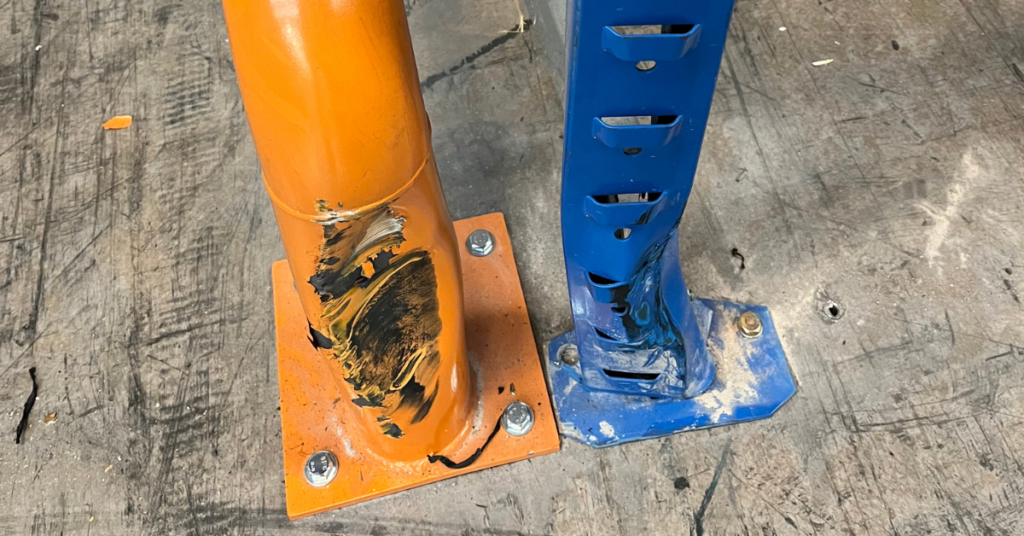
If an inspection identifies damage requiring action, the affected area may need to be taken out of use until the appropriate remedial work has been completed.
It’s important not to simply straighten, weld or modify damaged racking without suitable technical advice. The correct response will depend on the nature and severity of the damage.
How often should racking be inspected?
SEMA recommends a tiered approach to racking safety, including reporting of damage by operators, regular internal inspections and an expert inspection at least annually, with the frequency potentially increasing depending on the risk assessment and operating environment.
For busy, high-throughput warehouses, more frequent expert inspections may be appropriate.
Prevention is better than reaction
Racking inspections aren’t simply about ticking a box. They’re about identifying potential problems early and making sure your storage system continues to be used safely.
With trained staff, regular inspections and an expert SARI inspection, businesses can take a proactive approach to racking safety and maintain a safer, more efficient warehouse.
Is your racking due for an inspection? Talk to the Total Interiors Direct team.